Sunday, October 16, 2016

Question for the week of 10/16/16

Question for the week of 10/16/16:

 If you had a robot or a clone that could do your school homework, would you use it?


Riley Robot, created by the members of the Junior Seminar


Please bring a camera or smart phone so that we can create "selfies" during our class on October 23rd. Or, do you have a 3-D printer?

Twinkind is introducing the most realistic 3D printed figurines

Thursday, October 13, 2016

Question for the week of 10/09/16

Question for the week of 10/09/16:

Hypothetical cloning - what impact does it have on the world?
What are the moral implications of cloning?
Should we clone ourselves to populate the world with good people?

Walters, Kirk.  Toledo Blade http://www.toledoblade.com/Editorial-Cartoons Accessed 15 October 2016.
What issue is this political cartoon about?
What is the cartoonist’s opinion on this issue?
What other opinion can you imagine another person having on this issue?
Did you find this cartoon persuasive? Why or why not?
What other techniques could the cartoonist have used to make this cartoon more persuasive?


Tuesday, October 4, 2016

Question for the week of 10/02/16

Question for the week of 10/02/16:

Who am I, and how can I know in this digital world?
Lisa. Technophobia? https://businessnerds.wordpress.com/2011/06/22/technophobia/  Accessed 24 October 2016
 

Monday, September 26, 2016

Question for the week of 9/25/16

Question for the week of 9/25/16:


Consider the poor adults trying to cope with the digital world. They have to decide what kids should do in a world that is changing so fast nobody can keep track of it. I’m going to describe ten decisions made by an adult. Your job is to decide whether you agree with the decision. If you stand at number 1 on the continuum, you totally disagree with the adult. If you stand at number 10, you totally agree. But you don’t have to fully agree or disagree. You can choose a number in the middle if you want. You can also change your mind if you like, and move to another number after you hear what others have to say. Here are the situations:

1.     A math teacher says I won’t let my students use calculators or computers. They have to do all their math problems by hand and head. Otherwise they won’t learn a thing.
2.     A mother says My daughter is a wonderful piano player, so I don’t let her text. She might cramp her thumbs if she doesn.
3.     A Christian minister says You can’t email God. You have to talk to God directly. So I tell my families to ban all computers and other electronic devices all day long every Sunday.
4.     A father says I love computers and I trust my kids so I think they should use computers and smartphones whenever they want.
5.     A parent says I must be stupid. I keep having to ask my kids how to use my smartphone.
6.     A mother says I hope my son studies computer science in college because that’s how you make the most money these days.
7.     A police officer says Kids can get in trouble over the internet. So parents ought to keep an eye on them every time they use a computer. Moms and dads should always check the computer history to see what their kids have been doing.
8.     A parent says Everybody in our family has a computer and a cell phone, and we use them all the time. I think we need to agree to turn them off for an hour every day so we can talk to each other.
9.     A dad says I promised to buy my daughter a smartphone as soon as she can recite the UU Principles from memory.
10.  A parent says I won’t let my kids play real sports. They can get hurt doing that. And I’d rather have them home where I can keep an eye on them. 

Koren, Ed.  The New Yorkerhttp://www.newyorker.com/cartoons/a20093Accessed 25 October 2016.

Wednesday, September 21, 2016

Question for the week of 9/18/16

Question for the week of 9/18/16:

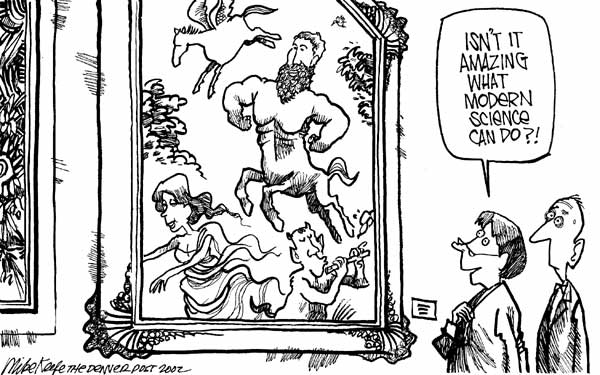
What is the digital revolution, and why is it a great and creative human achievement?
Keefe, Mike. The Denver Post http://www.intoon.com/toons/2002/KeefeM20020105.jpg?  Used with permission. Accessed 25 October 2016

You the Digital Creator: Our Goals

You the Digital Creator


Our Goals
  • To understand the digital revolution as a great and creative human achievement
  • To begin exploring and sharing our own digital lives
  • To create in ways advancing our understanding of the digital revolution and its promise
  • To experience group creation, individual and group thought, and increase appreciation of our own digitally-enhanced creative powers
  • To think about what the digital revolution means to religions in general and Unitarian Universalism in particular

Our Covenant:


  1. Respect Each Others Space
  2. Golden Rule
  3. Listen To Each Other
  4. Be Kind
  5. Have Fun
  6. Be Open-Minded
  7. Don't Talk Behind Others Backs
  8. Don't Talk When Someone Else Is Talking